Showing posts with label biodiversity. Show all posts

Tuesday, 7 April 2015

IPcommentator

Nagoya: A headache just for developing countries?

Nagoya is not as sexy as TRIPS?
Afro-IP is lending its voice to a very important post, by Leofriend Darren Smyth, which sadly received little attention on our sister blog - despite the EU masters taking it seriously. It is important because it explains how the UK has decided to play its part in ensuring that organisations share the benefit of genetic resources with the countries from which they have been obtained.

When this Leo saw the post, his immediate thought was that it may well not be the cup of tea of the majority on IPKat (cf. here); but, on second thought, he doubts whether the subject-matter would've generated a great deal of enthusiasm here. Previous Afro-IP posts are here and here. [Afro Leo says: "Perhaps some see Nagoya as one of those charitable side dishes legal thingummies for the benefit of developing and least-developing countries."]

Afro Leo might have a point if one considers the context provided in a nice little piece by Elsa Tsioumani (University of Edinburgh). Ms Tsioumani says:
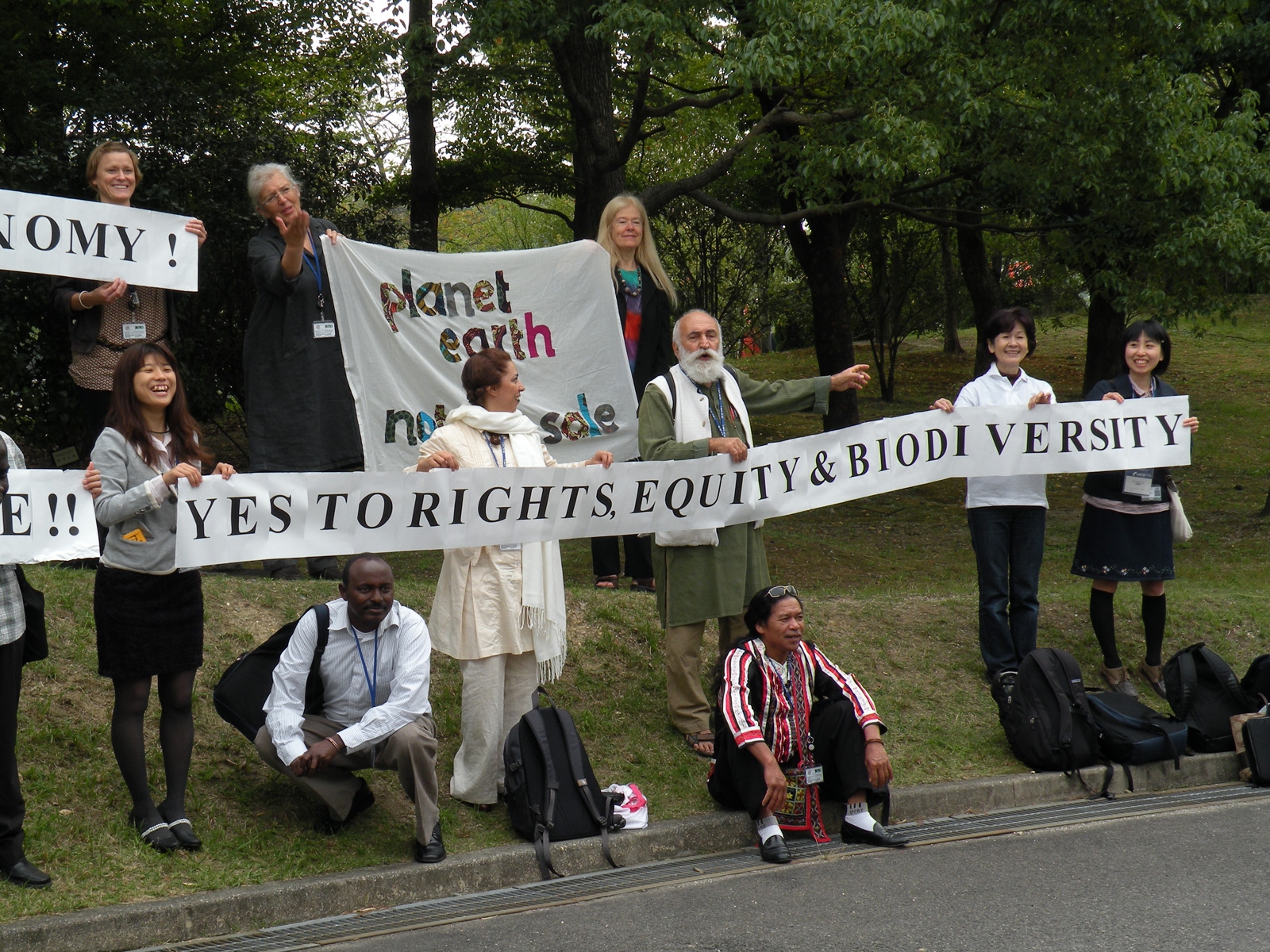

 The turnout looks like the blog interest
"...Most of the world’s biodiversity is found in developing countries; whereas developed countries usually host research institutes and companies that make commercial use of this biodiversity. In light of the asymmetries between States providing and using genetic resources, as well as growing expectations concerning the commercial value of biodiversity, ABS [i.e. the Protocol] was conceived as a tool for equity and as an opportunity for sustainable development. 

The idea behind it was quite simple: developing countries host most of the world’s biodiversity and thus genetic resources; commercial products developed on the basis of these genetic resources benefit mostly companies and consumers in developed countries; part of these benefits should flow back to the countries of origin of genetic resources."

It seems our friends at Spicy IP (e.g. here and here) are doing better on this topic. Please head over to the IPKat with any comments; alternatively, let's turn Nagoya into an attractive legal instrument right here on Afro-IP. 

------------------
Extra bits
------------------
Nagoya Protocol is here
Governments agree to make Nagoya work here
Study on the Implementation of the Nagoya Protocol in the EU and its impact is here
Nagoya implications for UNCTAD BioTrade initiative and BioTrade actors are here (draft copy)
Read More

Monday, 8 September 2014

IPcommentator

The Gambia ratifies ARIPO's Swakopmund Protocol

It kind of feels really nice like donkey’s years since this Leo wrote a blog post! There’s no better way to get back into the groove than with some good news from the smallest mainland country in Africa. 

Following on from Darren’s post, which informed us that The Gambia is keen on protecting traditional knowledge and folklore ('TK') for the benefit of its valuable tourism industry, this Leo understands that The Gambia has put its money where its mouth is by ratifying the Swakopmund Protocol on the Protection of Traditional Knowledge and Expressions of Folklore (ARIPO). Read all about it, as reported by The Standard, here

Readers may also wish to take note of what the Attorney General and Minister of Justice of the Republic of The Gambia said at the inaugural event of ARIPO’s IP roadshow seminar held in Banjul, The Gambia, last August. According to ARIPO’s press release: 

“…Hon. Justice Mama Fatima Singhateh highlighted the most significant achievements of the IP Office in the country namely the clearance of a backlog, [This is brilliant news! See Afro-IP’s post in 2012 which told us that they were working on it] the inclusion of IP in the National Science and Technology Policy and the drafting of the IP Policy and Strategy. [On which see Caroline’s report on IP policy in The Gambia here] Hon. Singhateh also indicated that the Government took the conscious decision of joining the Madrid System on Marks and is following up on latest developments on the Banjul Protocol reforms and the text of the Swakopmund Protocol on the Protection of Traditional Knowledge and Expressions of Folklore in order to consider accession.”[Talk about persuasion and conversion! Well done, ARIPO]

-------------------
Further reading
------------------- 
A primer on ARIPO’s TK protection regime is here
Afro-IP summarises the TK discussions at the 2013 Africa IP Forum here
India and WIPO partner to protect TK here
A report published by the UN on indigenous peoples is here (for IP rights & TK, see pp. 64 – 77)
The British Monarchy’s commercial value is protected under various laws, and in the world of advertising (As Darren mentioned in his post referenced above)
Read More

Thursday, 4 February 2010

roshana

More about Alice

On the 25th and 26th January 2010, the European Patent Office (EPO) in Munich heard a patent challenge by the African Centre for Biosafety on behalf of a rural community in Alice, South Africa, in collaboration with Swiss NGO, the Berne Declaration. The patent was granted to Schwabe by the EPO in 2002. The patent is in respect of a method for producing extracts of Pelargonium to manufacture a cough and colds syrup, Umckaloabo. The Daily Dispatch newspaper reports that the challenge was successful, and that the patent was rejected ( it is not clear from the report whether the application was rejected or the patent revoked). Schwabe has indicated that it intends noting an appeal. The documentation relating to this matter is available at
http://www.biosafetyafrica.org.za/index.php/20100115256/Pelargonium-Patent-Challenge-against-Dr.- Willmar-Schwabe/menu-id-100029.html
Read More